Showing posts with label Natural Hair. Show all posts

Tuesday, February 12, 2013

If You're Happy and You Know It....

Learning to LOVE  your natural hair


This post is strictly from the heart. Nothing about styling your hair or what products to use.
I've have seen several post and heard several comments from woman who just can't embrace their natural hair. Some have done a big chop, while others are transitioning. I hear everything from 'I don't like my curl pattern' to 'I just can't deal with this nappiness' to 'It's just too much work'. I've even had a few approach  me with, 'I think I'm going back to a relaxer' *takes a deep breath*
Ladies, ladies, ladies...JUST STOP IT!!! Excuse me for a moment while I climb onto this soapbox.

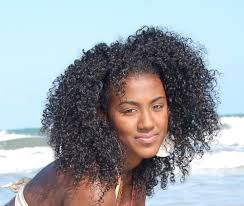
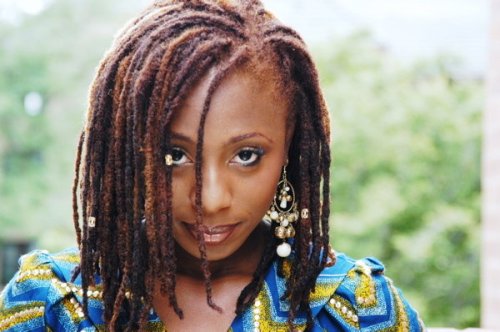
I am a self proclaimed natural hair advocate. I, personally, think that the hair that grows naturally out of your scalp is so beautiful. Whether you have super tight kinky thick curls or loose fine wispy curls, no matter your texture, it is yours! What you were born with, YOURS!!
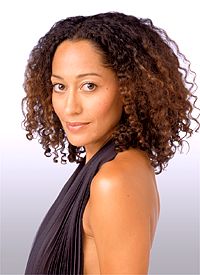
As naturals, you have got to get your mind right when dealing with your hair. You are not going to last if you are looking to achieve a different curl pattern from your own, I've said this before. Yes, they make products that help stretch and define your curls. Yes, you can do styles that give you a different curl pattern, but you CAN NOT be Kimberly Elise and get a Tracy Ellis Ross look! Sorry...

Look in the mirror and learn to love what you see.
I may be at fault here for assuming that all natural woman would have a certain appreciation for all hair textures, declaring that the way we were born is beautiful. Instead a lot are feeling like you have to have a certain hair type to wear it naturally and that just isn't the case.

Now that whole 'It's too much work' thing is another post, but I will say the maintenance of natural hair can be time consuming. You can't just run a comb through it, wrap it and go about your business. The detangling process is a task with in itself. Once again, you have to get your mind right. Figure out what you are capable of doing and get a "regular" routine in place that fits your schedule.


Long story short here ladies...
Your natural hair is the hair that grows out of your scalp. It's part of your character, who you are. It's okay to admire other textures, but don't covet it. There is so much you can do to your hair. One positive connotation of ALL natural  hair is its versatility. Naturals have the pick of the liter when choosing hair styles. Twists, braids, thermal styles, sew ins...Oh don't get me started!! Don't be afraid to try something new...Try it, you might like it!! There you have it in a nut shell. God created you, hair included! What you see is what you get, so learn to love it!

Tuesday, August 14, 2012

Some Like it Hot!

Natural Hot Oil Treatments


If your mother was anything like mine, then you got the joy of seeing her put a tube of oil in a cup of hot water and then pouring the delicious warmth all over your hair and scalp, allowing it to sit for a good 10 minutes before rinsing it out.
This was always one of my favorites when getting my hair done.


You don't hear a whole heck of a lot about hot oil treatments as much as you used to, but as naturals I feel it should be an important part of your hair care regimen. It has been a long time since I actually bought one of the tubes my mother used to use. Instead, I now make my own. With that being said, I'll share with you how and what to use to successfully mix your own hot oil treatment.

First lets do a quick overview of some oils and their benefits:

Coconut oil: Stimulates hair growth, softens the hair and conditions the scalp. It also helps to get rid of dandruff.

Olive Oil: High in the antioxidants Vitamin A and E providing anti-aging properties and it's moisturizing, soothing and healing.

Castor Oil: Adds strength to the hair, so if your hair is thin and breaks easily, consider adding this oil to your mix. Also acts as a humectant  by attracting and retaining moisture to the hair.

Almond Oil: It helps condition, nourish and soften hair while stimulating hair growth.

Jojoba Oil: This oil is the closest to sebum, which is the oil our scalp secretes. It leaves the hair feeling soft and light, without weighing it down.

Here are some other types of oils
click on the name for more information

All of these oils should be easily found at your local health food stores, online or even at some of your local supermarkets.


Is it okay to mix several oils together, you ask? By all means, do!!! Mix until your heart's content. If you suffer from dry and flaky scalp, try mixing Castor oil and coconut oil together. For thicker and to possibly boost your hair growth, try mixing almond and Castor oil. Try two, three, four or whatever! Your hair will let you know what it loves. If your feeling really froggy, you can even add some essential oils for added benefits such as Rosemary, Clary Sage, Lavender, Ylang Ylang, Tea Tree and Sage just to name a few. You would only need to add a few drops to your mix.

What you'll need:

  • Your Oil Blend
  • Hot Water
  • Towel
  • Plastic Cap or Plastic Wrap

Applying Your Hot Oil Treatment:

  1. Mix your oil in a heat safe plastic bottle or glass container
  2. Place the bottle or container in hot water for a minute or two
  3. Test oil on your wrist, making sure it's not too hot. Apply oil to scalp, roots and length of hair
  4. Massage oil into the scalp for a few minutes
  5. Cover hair with a plastic cap or plastic wrap
  6. Dip towel in hot water, ring out excess water and wrap towel around your head.
  7. Allow oil to sit in the hair no less than 30 minutes and up to overnight

Warming the oil and towel will cause the hair cuticles to open up and absorb all the goodness. Don't worry that the towel doesn't stay warm very long, your hair is soaking it in, trust!

Rinse the oil out of your hair and follow up with your shampoo and conditioner. I recommend not using a clarifying shampoo as it is designed to strip the oils out of your hair, defeating the purpose of the treatment. Your end result should be soft and shiny hair.

*NOTE*
You can do these treatments as much as once a week or few as once a month. Depending on what your hair needs.
Your hair doesn't have to be dripping with oil, so no worries of hurting your pockets with the cost of purchasing oils.
Make notes of how the oils make your hair look and feel, so you'll know what works best for you.
The oil doesn't have to be scalding hot, your scalp will appreciate that. Warm will do the trick.


Monday, June 25, 2012

First Lady Gone Natural

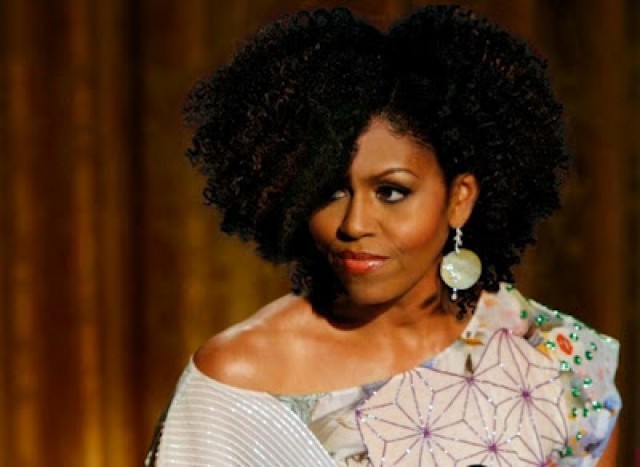
A while back the natural hair blogging world went into overdrive when a photo of the First Lady Michelle Obama wearing a beautiful head of kinky curls hit the Internet. Though she looked stunning, it didn't take long to realize that the picture wasn't quite right and photoshop played a major part.

The photo was brought to the attention of fellow blogger and author of Natural Chica, Maeling Tapp. She received messages saying that Michelle Obama's hair looked a lot like hers. When she saw the picture, she discovered that the hair indeed was hers and had been photoshopped onto the picture.

A lot of people who follow my blog said, 'I had a feeling that was your hair,'" Tapp told ESSENCE.com.  "It's kind of surprising that other people recognize my hair so well."  Tapp posted a side-by-side photo of her and the First Lady onto the Natural Chica Facebook page which quickly garnered over 1,000 "likes" and "shares."

Tapp says that she hopes the photo spoof will encourage Mrs. Obama to experiment with natural styles.

"There have been so many positive responses to seeing Mrs. Obama go natural so I hope it inspires her to try and wear more curly styles," said Tapp.

When asked what hair advice she'd give our Commander in Chic, Tapp says it would be to "be creative and experiment with your hair. When dealing with natural hair, there is a lot of trial and error. But if you see it as a really fun way to try new things, it’s not a frustrating process at all. It becomes more of an enjoyable and inspiring journey." 

Imagine how influential she would be, not just to other women, but to little girls all around the globe if she rocked kinky textured hair!!
What to you think? Do you think she would have much impact? Would you like to see her sporting the curls?


The real picture

Monday, May 21, 2012

Naturally Professional

A friend of mine works in a dentist office. She is one of a very select few of African Americans there and she is also 100% natural. I was talking with her recently and she told me that she continuously receives off the wall questions and comments about her hair. Questions ranging from "What does it feel like?" to even unnecessary ones like, "What do you plan on doing with that Don King hairdo?" My friend, being the kind hearted person that she is, answers her coworkers professionally and patiently. Me? I don't think I would be so gracious. Even my mother, who is natural, has had conversations with me about the hair styles she chooses to wear on her job. She said she likes different natural styles, but because of her position at work, she didn't think the styles would be accepted or that it was work appropriate. So, I thought why not talk about natural hair in the corporate world.
As asked in the movie Good Hair, Why is it that wearing one’s hair, the way God created it such a revolutionary idea?
Here is a little background from Black Enterprise for those who are completely clueless on the subject and those who know, but need a reminder.
 There is a negative stigma attached to natural Black hair in the United States and frankly in most places of the world. The story starts way before the current natural hair craze that some people think is a fad, and before the 1970′s when Afros became popular as a “political statement” for activists who wanted to revel in “Black beauty” but was then temporarily accepted by the rest of the Black community and White ones too.

In the 1800′s and early 1900′s nappy, kinky, curly, hair was deemed inferior, ugly, and unkempt in comparison to the flowing, bouncy, hair of people from other cultures. The caricatures of Blacks that surfaced during that time in movies, children’s books, on laundry detergent, and food products were commonplace and they taught Blacks and Whites alike to loathe the appearance of Black hair and to associate it with dirtiness, unruliness and even character traits like laziness and dishonesty.

While the dark complexions, wider noses, and fuller lips of Blacks were also disparaged, the texture of our hair was the only thing that we could realistically and drastically change (at that time) about our appearance to escape those negative associations. And making that change was encouraged as Blacks who straightened their hair were deemed more likable, agreeable, and dependable by Whites; even more employable.

Sadly, this article still holds true today. Check out the video on this blog about two women. One is completely natural while the other is transitioning and skeptical. Going natural in corporate America

To make a long story short, Don't let your hair or other people define who you are supposed to be. Be confident and know your worth, YOU ARE BEAUTIFUL! You are exactly how God created you and you should never have to apologize for that. You got your job because of your skills, not your looks. In the words of India.Arie, "I am not my hair."

Wednesday, September 7, 2011

DREADing the situation

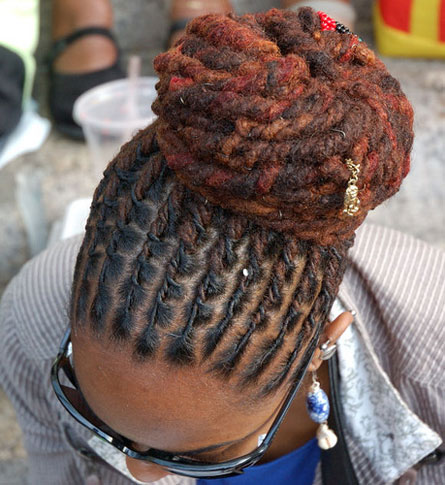
Dread locks have been around for a very long time. People associate them closely with the Jamaican Rastafarian, but believe it or not Ancient Egyptians and Asian emperor's wore them. They have been worn all around the world and throughout time in all hair types.
Being one of the low maintenance styles, it is a popular way of wearing hair in the natural world. It's also a permanent style, once you are fully locked, reversing the do is a task outside of shaving your head. So, you have to get your mind right before making the decision to lock your hair.
Now that you've made the decision, it's time to choose a starter style. This choice will be based on your personal preference and lifestyle. I have blogged on previous posts the how to's on different natural styles that are great for starter locks. Finger coils, two strand twists, comb twists and single braids are probably the most styles used for starters. In some cases, people even free form their hair, where they just let leave the hair alone and let it lock up without any maintenance.With free form dreads, you are liable to have locks of all shapes and sizes.

Dreads created with two strand twist
 
Bob Marley with free form dreads


The process of achieving the the locks that you want is pretty tedious and requires quite a bit of patience. You should expect to go through 5 stages:
Starter
Starter locks is simply the style you choose to begin with. Be sure the sections created are not too small. As the locks grow, if they are too small it is possible for them to break off.

Budding
In this stage, you will notice that your roots are getting puffy and your starter style is getting frizzy. This will be the time to practice re-twisting your new growth. Invest in a good locking gel or even aloe vera gel. Beeswax is also a popular product for maintaining dreads, but it goes back to that whole no no to petroleum thing. As I've said before, read your labels to make sure the product is good for the hair. Also, make sure to keep track of the original section partings when re-twisting to maintain a consistent and uniform size. The length of time for this stage can range from 6 months to a year. Shampooing your hair will be null and void until you get a really good lock going on. Cleansing the scalp with an astringent will be your only hair maintenance at this time.

Teen
Just like a normal teenager, this may be the stage when you are wondering what is going on with your hair. If your hair is short, your teen locks may seem to sprout all over your head and go in any old direction. This is when patience comes into play. If you can persevere through this stage, then you will enjoy the outcome.

Mature
This stage is about 18 months into your locking journey. Your hair should be long enough to lie flat or hang down. You probably won't have to re-twist your new growth as often. By this time you should be enjoying your locks and have a regular shampooing and conditioning routine.

Rooted
This stage is where you have strived to be. Your locks are firmly in place. You can trim your locks to a manageable length if needed. Your hair care routine can be as simple or as complex as you choose, but rooted locks require little more than regular cleansing, conditioning and moisturizing.


Complex style


Simple style


 In general, the thicker and more tightly coiled the hair's natural texture, the quicker your hair will lock. While people with straight or wavy hair can achieve locks, they may need some product help and more time and patience, as the locking process is longer.

Here is a book that may be of interest to anyone contemplating dread locks.
http://www.amazon.com/Nice-Dreads-Inspiration-Colored-Considered/dp/140005169X

Wednesday, June 22, 2011

Not so Relaxed...


So you've made the conscious decision to go natural, now what??
It's time to transition. What does transition mean? Transitioning is when you decide to no longer alter your new growth with relaxers or chemicals, you will have to transition from relaxed or straight hair to natural. For some the whole idea of transitioning isn't easy, but for others the decision was made for them when relaxers caused there hair to shed and fall out. The transitioning period is probably the most frustrating part of being natural. I've seen women have doubts or lose patience and say they were going back to the "creamy crack". They find that as their natural hair is growing, they can't treat their hair as if they still have a relaxer. So, their whole mind set has to change. Also, having to deal with two different textures during the transition can be enough to make you relapse. 
Now that you're in the transitioning period, how long does it last?
That's totally up to you. I transitioned for maybe 4 or 5 months and got all my relaxer cut out. Doing this is called The Big Chop or BC in the natural hair world. This is ultimately the easiest way to go instead of fighting with the two different textures. Now depending on how much new growth you have a BC could result in either shaving your head or sporting a twa (teeny weeny afro).
The other way to go is to gradually grow the relaxer out and cut a little at a time. This method requires a little bit more work than the BC, but some women don't want to take such a big step. In this case you can choose protective hair styles such as weaves, wigs or braids. If you choose to go this route, make sure you are cutting the relaxer a little at a time, because having two different textures will do more harm than good. You've got the new hair and the relaxed hair fighting against each and the line where they meet is the weakest part of your hair, which is where it will break. However, it is possible to minimize breakage by learning proper combing techniques and with product. I know women who have transitioned for a whole year with great results.
Transitioning doesn't have to be hard. All you need is a little patience and persistence. I know you may go through doubts, frustration and even fear, but hang in there. You'll soon experience excitement once you see those beautiful  coils and curls.  

Monday, June 13, 2011

Grow your hair NATURALLY

It's very easy to fall into the trap of advertisements for products that promise to increase the rate of your hair growth, but sometimes these products aren't the best route to take. Protein, which is essentially what hair is made of, is a natural vitamin found not only in supplements but also in the food we consume.
So, if you have a diet that is low in protein then this can create irregular hair growth or even stunt growth all together. That being said, when you choose to eat a high in protein diet, then your hair will both grow at a faster rate and just be healthier overall.
Some foods to consider when boosting up your protein intake are lean meats, fish, poultry, dairy products, soy, nuts and grains. If you eat just one of these a day, you can help build your protein levels and therefore promoting the growth of your hair.
You'll find there are many protein hair treatments products on the market, which claim to boost your hair growth and overall appearance. While these products do have their advantages, it's still best to to start with natural protein through your diet and combine it with the products.
With your hair being protein based, IT'S ONLY NATURAL that through putting the proper amounts in your diet and through supplement intake, it just may be all you need to see a dramatic increase in hair growth.
Related Posts Plugin for WordPress, Blogger...