Showing posts with label Hair Benefits. Show all posts

Tuesday, August 14, 2012

Some Like it Hot!

Natural Hot Oil Treatments


If your mother was anything like mine, then you got the joy of seeing her put a tube of oil in a cup of hot water and then pouring the delicious warmth all over your hair and scalp, allowing it to sit for a good 10 minutes before rinsing it out.
This was always one of my favorites when getting my hair done.


You don't hear a whole heck of a lot about hot oil treatments as much as you used to, but as naturals I feel it should be an important part of your hair care regimen. It has been a long time since I actually bought one of the tubes my mother used to use. Instead, I now make my own. With that being said, I'll share with you how and what to use to successfully mix your own hot oil treatment.

First lets do a quick overview of some oils and their benefits:

Coconut oil: Stimulates hair growth, softens the hair and conditions the scalp. It also helps to get rid of dandruff.

Olive Oil: High in the antioxidants Vitamin A and E providing anti-aging properties and it's moisturizing, soothing and healing.

Castor Oil: Adds strength to the hair, so if your hair is thin and breaks easily, consider adding this oil to your mix. Also acts as a humectant  by attracting and retaining moisture to the hair.

Almond Oil: It helps condition, nourish and soften hair while stimulating hair growth.

Jojoba Oil: This oil is the closest to sebum, which is the oil our scalp secretes. It leaves the hair feeling soft and light, without weighing it down.

Here are some other types of oils
click on the name for more information

All of these oils should be easily found at your local health food stores, online or even at some of your local supermarkets.


Is it okay to mix several oils together, you ask? By all means, do!!! Mix until your heart's content. If you suffer from dry and flaky scalp, try mixing Castor oil and coconut oil together. For thicker and to possibly boost your hair growth, try mixing almond and Castor oil. Try two, three, four or whatever! Your hair will let you know what it loves. If your feeling really froggy, you can even add some essential oils for added benefits such as Rosemary, Clary Sage, Lavender, Ylang Ylang, Tea Tree and Sage just to name a few. You would only need to add a few drops to your mix.

What you'll need:

  • Your Oil Blend
  • Hot Water
  • Towel
  • Plastic Cap or Plastic Wrap

Applying Your Hot Oil Treatment:

  1. Mix your oil in a heat safe plastic bottle or glass container
  2. Place the bottle or container in hot water for a minute or two
  3. Test oil on your wrist, making sure it's not too hot. Apply oil to scalp, roots and length of hair
  4. Massage oil into the scalp for a few minutes
  5. Cover hair with a plastic cap or plastic wrap
  6. Dip towel in hot water, ring out excess water and wrap towel around your head.
  7. Allow oil to sit in the hair no less than 30 minutes and up to overnight

Warming the oil and towel will cause the hair cuticles to open up and absorb all the goodness. Don't worry that the towel doesn't stay warm very long, your hair is soaking it in, trust!

Rinse the oil out of your hair and follow up with your shampoo and conditioner. I recommend not using a clarifying shampoo as it is designed to strip the oils out of your hair, defeating the purpose of the treatment. Your end result should be soft and shiny hair.

*NOTE*
You can do these treatments as much as once a week or few as once a month. Depending on what your hair needs.
Your hair doesn't have to be dripping with oil, so no worries of hurting your pockets with the cost of purchasing oils.
Make notes of how the oils make your hair look and feel, so you'll know what works best for you.
The oil doesn't have to be scalding hot, your scalp will appreciate that. Warm will do the trick.


Tuesday, May 29, 2012

Shea Butter...Unrefined VS Refined


When it comes to Shea butter, you have two choices. Unrefined or Refined, but which do you choose? First let me back up for a minute and tell you a little bit about Shea butter.
Shea butter is derived from the seed of the Shea tree in Africa. It contains both vitamin A and E. It's not only used in the hair, but also to treat skin conditions like wrinkles, eczema, blemishes and dermatitis. It is also used to treat insect bites, sunburns and frostbite. The differences between unrefined and refined is how the two are processed. Both of them have the same origins from the Shea tree. The nuts are harvested and crushed to extract the butter. It it during the extraction process where you can distinguish between the two.

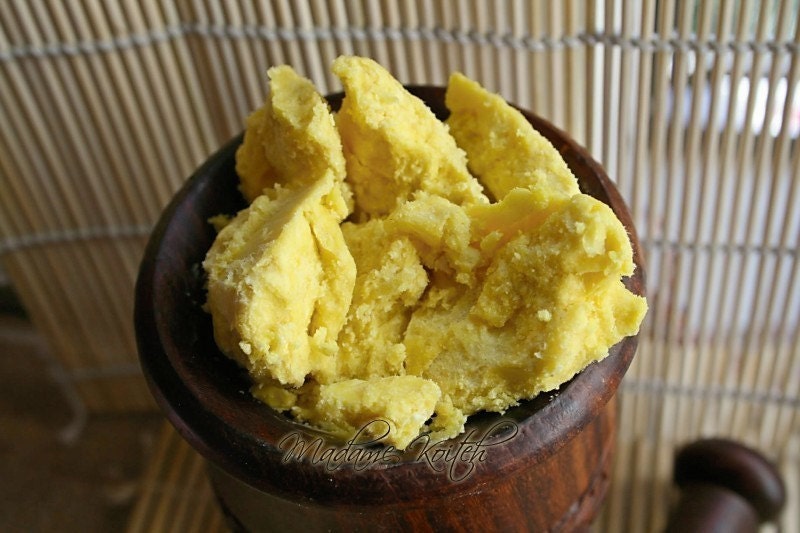
Unrefined Shea butter is extracted using water only, either by hand or machines, without the use of chemicals and synthetics. This end product is also commonly known as raw Shea butter or organic Shea butter. Its color ranges from beige to light golden yellow and its texture is usually grainy. This method will keep all the vitamins, minerals and other properties of the Shea butter intact. Unrefined Shea butter has a smoky and nutty smell which can be unappealing to consumers. I find adding essential oils such as rosemary, peppermint or lavender help to disguise the smell.

Refined Shea butter is extracted using hexane and other petroleum solvents. It is then refined and bleached by heating it to high temperatures. Other additives and preservatives are also added to remove the nutty smell, resulting in it becoming odorless. It is also white in color which is more physically appealing instead of the yellowish color of the pure traditional Shea butter. This type is also smooth in texture because they have been refined to get rid of the grainy molecules. During the refining process, Shea butter loses many of its vitamins and minerals.

So, which do you choose? Unrefined Shea butter has the highest concentration of vitamins, antioxidants and benefits that you could possibly get. If you do not mind the nutty smell, go for this type because they are far more effective compared to refined ones. They are, however, more expensive compared to refined ones and you would have to learn how to store Shea butter properly so that they can last longer.

Remember, Shea butter is not a good moisturizer, as it doesn't contain any water. Applying it to dry hair can result in locking moisture out of your hair, making it brittle and prone to breakage. It is, however, an excellent sealant for the moisture that you do put into you hair. I like melting my unrefined Shea butter in a plastic container by immersing it into a cup of boiling hot water. Then I'll add coconut oil, lavender oil, rosemary oil, sweet almond oil and grapeseed oil to it. I'll apply a good moisturizing leave in conditioner to my damp hair and seal it in with the Shea butter concoction, concentrating on my ends. Mix and match to come up with a concoction that your hair will love. LOVE YOUR HAIR!!!


Monday, October 17, 2011

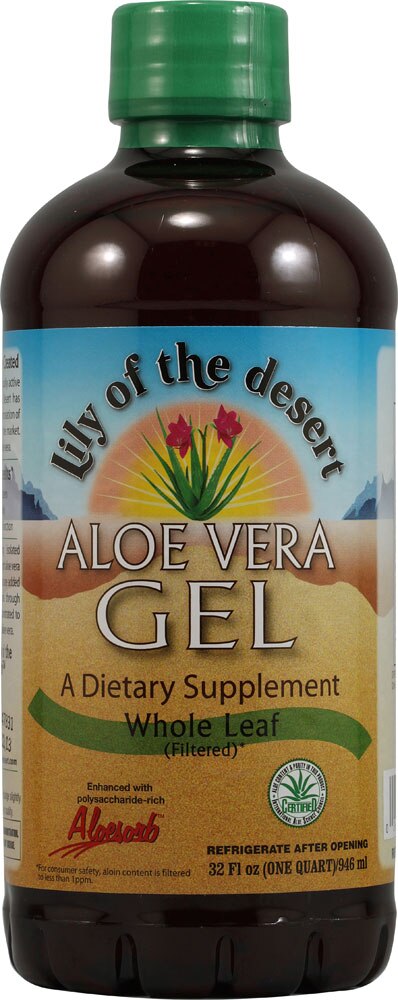
Aloe Vera...Nature's Moisturizer


As a child, I remember my mother having an Aloe Vera plant in our kitchen window seal. She would break off a piece and rub the juice from it onto my skin if I had a burn or cut. I always thought that was its only purpose. How pleasantly surprised I was when I discovered Aloe Vera has many different benefits, including hair care. 
I first heard of incorporating Aloe Vera into hair products through the infamous Kimmytube videos on Youtube. After further research here are the benefits I found for Aloe Vera in hair.

  • Detangles
  • Moisturizes
  • Activates Fresh Growth
  • Heals and Soothes Damaged Scalp from Scratches, Burns, Dandruff, etc.
  • Reduces Dandruff, Itchy, Scaly Scalp and Seborrheic Dermatitis
  • Balances pH Level (Porosity) of Hair
  • Tames Oily Hair
  • Defines Curl
  • May Serve as Holding Gel
  • Prevents Excessive Hair Loss
  • Enhances Cellular Rejuvenation
  • Contains Natural Building Enzyme for Proteins
  • Anti-Inflammatory
Who knew!??!
Aloe Vera  helps promote new hair growth for some people. You can use either gel or juice. The gel can be applied directly to the scalp, as external use of Aloe Vera has no side effects. If you don't own a plant, you can easily purchase gel or juice at a local supermarket or health food store. I recommend purchasing the product pure with no added preservatives. You'll have to refrigerate it once opened along with any product you use it in to keep it from spoiling.


I personally use the whole leaf juice and I incorporate it into my leave in conditioner. My hair loves it!! My hair is softer and more moisturized after using it. Of course you'll need to seal the moisture in with a butter of your choice...Shea, coconut, olive oil, etc. I'm probably going to start using it in other products as well to see if I can achieve greater effects. I've read that you can also use it by itself.
Mix and match and experiment. Find what works for you and YOUR hair.
As always...LOVE YOUR HAIR!!

Friday, August 26, 2011

More Harm Than Good


One of the main things I've learned in cosmetology school is how important it is to have product knowledge to inform clients of how their hair will benefit from using them, but one thing they don't teach us in school are harmful ingredients in hair products that could damage not just your hair, but also be hazardous to your health.
All beauty products are required to have a list of ingredients somewhere on the packaging. It is important to not only read the list, but also understand what you are reading so you will know what to avoid. The Federal Trade Commission orders that ingredients that are present in higher amounts in the product go to the top of the list. I've always been told the most important ingredients of a product are the first five on the list. Sometimes the active ingredients are on a separate list. Also, according the the International Nomenclature of Cosmetic Ingredients (INCI) system, ingredients have to be named using their scientific names and for plants, Latin names. Sometimes you'll find the English name in parenthesis, for example, Shea Butter is often listed as Butyrospermum Parkii (Shea Butter).
With all that being said, how do you know what is harmful to the hair??

Here are list of the most harmful ingredients found in hair care products
Sodium Lauryl Sulfate/Sodium Laureth Sulfate:
I have blogged before about the benefits of using sulfate free shampoo, so here is a reiteration of the harmful traits of sulfate. Both of these sulfates are cheap, harsh detergents that are found in the majority of shampoos. They are used to create lather or foam. A super lathering shampoo is not necessary to cleanse the hair and scalp. All that excess lather is just to make you think your shampoo is working properly. These sulfates are also commonly used in car washes and engine degreasers. They are generally derived from petroleum, also a harmful ingredient, and often cause eye irritation, scalp irritation and tangled hair.
Now to flip the script just a second on sulfate free shampoos...If you are using one, that's great, but just be careful!! Sometimes, when a company removes the sulfate from their product, they add salt (sodium chloride). Salt is just as bad, if not worse for your hair. Salt is abrasive or rough. If you shampoo your hair with a salt containing product, you're actually creating friction on your hair (think of an exfoliating scrub in your hair...no good!) Not to mention that it's strips the hair of moisture.

Parabens (methyl, propyl, butyl, and ethyl):
Parabens are added to hair products to act as a perservative, inhibiting microbial growth and extending the shelf life of the product. Unfortunately, parabens are also estrogenic and disruptive of normal hormone function. Exposure to these parabens has been linked to breast cancer. They've also been known to cause allergic and skin reactions.

Diethanolamine (DEA) and Triethanolamine (TEA):
These ingredients are synthetic emulsifiers and/or foaming agents. They are highly acidic and can cause allergic reactions, eye irritation, and dryness of the hair and skin. DEA and TEA are ammonia compounds, which are potent carcinogens or cancer causing. DEA can also strip away vital amino acids from the hair and the skin, like keratin. This will leave the hair feeling dry and unmanageable.

Formaldehyde:
This ingredients has become a hot topic since the emurge of the hair treatment the Brazilian Blowout. Which turns frizzy unmanageable locs into luxurious bone straight hair, but tests have determined that the product contains unsafe levels of formaldehyde or embalming fluid-a known carcinogen. Adverse reactions to formaldehyde can include allergies and affecting the nervous system.

Mineral Oil and Petroleum:
For years black women have caked "hair grease" onto their hair and scalp in hopes of achieving hair growth of some kind. I can remember my mother slathering Blue Magic onto my head every other day to help with "moisturizing" my hair and scalp. I don't mean to burst your bubble if this is still a practice you use today, but you are doing your hair and scalp no good with these products. These ingredients give the hair an artificial shine and are cheap to make and sell. Mineral oil and petroleum clog the pores on the scalp making hair growth null and void. They also coat the hair strand making it impossible for moisture to get in, which makes hair much more susceptible to damage and breakage in the long run.

Now, I know you may say, "But Tasha, trying to avoid these products can be expensive!" And you are right! Think about this though...if you ask someone who has had or is battling cancer if they would pay just a little bit more  in order to avoid the ratchet disease, what do you think they would say? I'm thinking the answer would be YES! To step down from health concerns, just think about how the hair can thrive from not subjecting it to such cruel and unusual punishment.

So, it is up to you to READ THE LABELS of your hair care products and gain knowledge of the ingredients, with these harmful products lurking around every corner being advertised as "helpful" or "good" for our hair, ready to strike at any moment.

Tuesday, August 16, 2011

The Benefits

I recently discovered a new site called benefitof.net. It gives the benefits of everything from overdraft protection to the benefits of Facebook. In the life style section under fashion and beauty, I found a lot of benefits of products we use regularly in our hair. So, I thought I'd share some of the stuff I read about.


Co-washing
The first thing I read wasn't a product, but something I know a lot of naturals do and that's co-washing. Co-washing is the act of shampooing your hair with conditioner instead of shampoo. One of the important benefits is you retain more moisture in your hair, since you wouldn't be stripping your hair of its natural oils with shampoo. This is especially good for overly dry hair. BUT please don't leave out shampooing your hair. The purpose of shampoo is to rid the hair of product build up and excess debris, which can clog the pores. Conditioners were not made to do that. With that being said, co-washing isn't bad, but shouldn't be the ONLY means of cleansing your hair.
Sulfate free shampoo
Both Sodium Lauryl Sulfate (SLS) and its close relative Sodium Laureth Sulfate (SLES) are commonly found in many household products like soap, shampoo, detergents, toothpaste and other products we expect to "foam up". These products, containing sulfate, have also been frequently reported to be the cause of eye irritation, scalp irritation, tangled hair, swelling of hands and face, and split fuzzy hair. These side effects are a reason in itself to use sulfate free shampoo. Another benefit would be reduced hair loss. Using sulfate causes the hair to be dull and breakable. Sulfate free tames the hair hardness and leaves the hair soft and easy to comb.
Extra Virgin Olive Oil
I have and will make frequent references to extra virgin olive oil (EVOO). It is one of my favorite hair staples. This is a very versatile product, used in everything from cooking to easing the noise of snoring. Packed full of minerals, vitamins and antioxidants, EVOO helps to provide the hair with nutrients needed for hair growth and helps to preserve the moisture in the hair. One of the things I do, is when using my leave in conditioner, I seal the moisture into my hair strands with a mixture of shea butter and EVOO. It's very affective.

Black Soap
I've never used this product, but have read numerous things about the benefits. A lot of naturalistas live by black soap. Black soap or African black soap is traditionally hand made in Africa from ingredients found in nature. Research has revealed that black soaps might contain many different ingredients, but majority of black soaps contain various oils, like the coconut oil, palm oil, palm kernel oil, shea butter and cocoa butter. They also contain ashes from different plants, like shea tree bark, banana trees, cocoa pods, and plantain leaves.
Black soap can be used for cleansing the hair. After cleaning use your regular conditioner for shiny lustrous beautiful hair.
Black soap contains a very high content of glycerin; it can easily absorb moisture from the air. To prevent it from spoiling due to humidity, black soap must be stored in a sealed plastic bag or dry container.


Tea Tree Oil
Tea tree oil is has antibacterial properties and act as a natural disinfectant. It is obtained by steaming leaves of the tea tree or Melaleuca tree and then compressing them to extract their oil. For hair, mixing tea tree oil into your shampoos and conditioners will  help to get rid of dandruff. By acting as a disinfectant for the scalp, tea tree oil reduces the build up or residues around the follicles allowing for the free flow of sebum, hair's natural oil, into our hair shaft. Also, by reducing the inflammation around the follicles, tea tree oil  promotes regeneration of existing hair while promoting new growth.


MSM
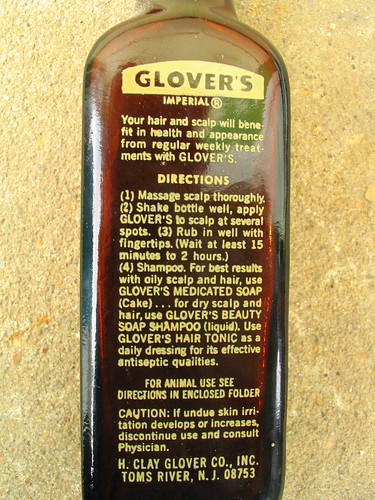
Methylsulfonymethane, or MSM, is a form of sulfur used to maintain healthy cells, organs, tendons, hair, skin and nails. I remember as a child my mother slathered Sulfur 8 and Glover's Mange onto my scalp regularly. I can't recall ever suffering from dandruff as a child. Though it doesn't smell very pleasant there are several benefits for sulfur in the hair.
Regular use of MSN helps your hair grow faster and naturally. It revitalizes hair follicles by increasing circulation in the scalp, thereby eliminating waste and toxins. It also assists essential nutrients like calcium, pantethol, and biotin to build strong hair.Studies suggest that MSM increases production of keratin, the protein found in hair fibers responsible for healthy hair. It not only prevents hair breakage, but is also beneficial for glossy hair as is makes your hair follicles flexible.


Onions
The last one that I want to share with you is the foulest of them all, but beneficial. Not only for eating purposes, onions have antifungal and antibacterial effects that make them useful for hair treatments and skin care. Studies have shown that applying onion juice to the scalp twice a week for a period of time will encourage hair growth. The sulphur contents of the onion regenerates the hair follicles, promoting hair growth.
These are just a select few of many benefical things out there for healthy and happy hair. Check out the site for yourself, benefitof.net.
Related Posts Plugin for WordPress, Blogger...